

Addressing the Indonesian Parliament in Jakarta, Prime Minister Modi said India firmly believes in freedom of navigation across the Indo-Pacific. He stated that India is a nation that follows the path of development rather than expansionism. The remarks are widely viewed as a message directed at China, which has continued expanding its military presence in the South China Sea and surrounding waters.
The Indo-Pacific remains one of the world's most critical strategic regions, with nearly 60 percent of global maritime trade passing through its sea routes. India has consistently supported the principle of unrestricted navigation in the region. The Prime Minister's Indonesia visit, along with his recent engagements with foreign leaders, reflects India's evolving regional strategy aimed at strengthening partnerships across the Indo-Pacific.
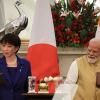
Earlier, during Japanese Prime Minister Sanae Takaichi's visit to New Delhi, both countries had reiterated their commitment to a free and open Indo-Pacific. Australia, the second destination of Prime Minister Modi's current overseas tour, is also expected to feature discussions on the same strategic agenda.
India believes that countries across the Indo-Pacific must work together to establish a cooperative regional framework. The Quadrilateral Security Dialogue serves as an important example of such cooperation. The United States had earlier attempted to position the grouping as a counterbalance to China. However, the priorities of the Trump administration have since shifted, with both Washington and Beijing now seeking reconciliation. As a result, concerns surrounding the Indo-Pacific could receive reduced attention from the major powers.
Despite these changing global priorities, countries in the region cannot afford to step back from their strategic interests. India is working to unite Japan, Australia, and other regional partners around a shared objective of maintaining stability, security, and cooperation across the Indo-Pacific.
Beyond security concerns related to China, the Indo-Pacific represents significant economic and technological opportunities. Long-term partnerships can be developed in sectors including green energy, rare earth materials, semiconductors, technology, and critical minerals. Several of these sectors remain heavily dominated by either the United States or China. If India succeeds in building an alternative supply chain across these strategic industries, it can strengthen its own geopolitical position while contributing to greater stability across the global economy.
About The Author









Comment List